

Decide what belongs in the channel
An agency may want to share a local hazard, an incident update, or a request for public information. Define which kinds of content are appropriate and which channels remain responsible for emergency warnings.
Lucas and Sentinel do not replace emergency dispatch or an agency's official warning obligations.
Geographic focus gives the instruction a boundary
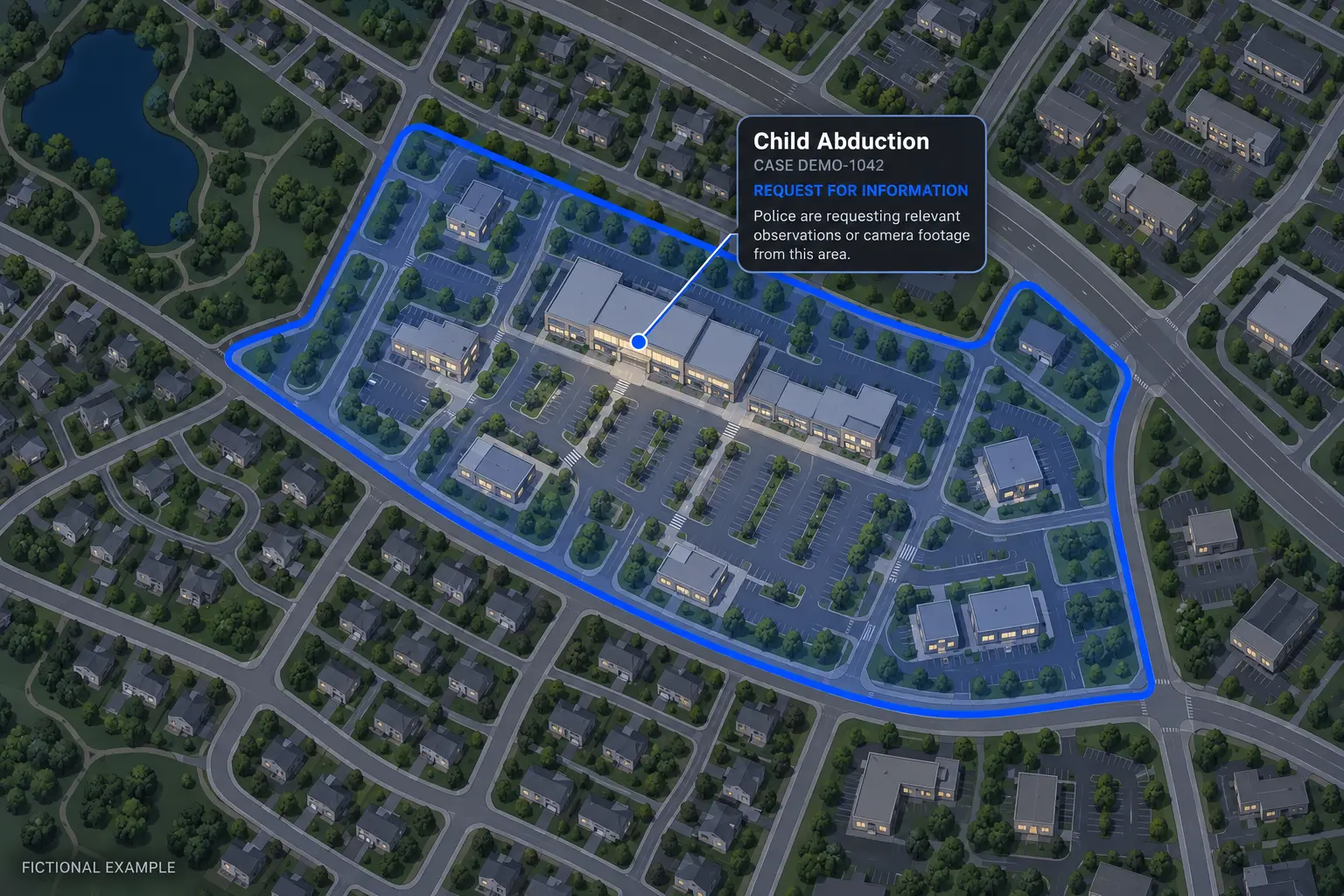
Choose the area relevant to the incident before publishing. A shelter instruction for one neighborhood should identify that boundary clearly; a request for camera footage should identify the place and period that could assist the investigation. Geographic targeting and clear wording support one another.
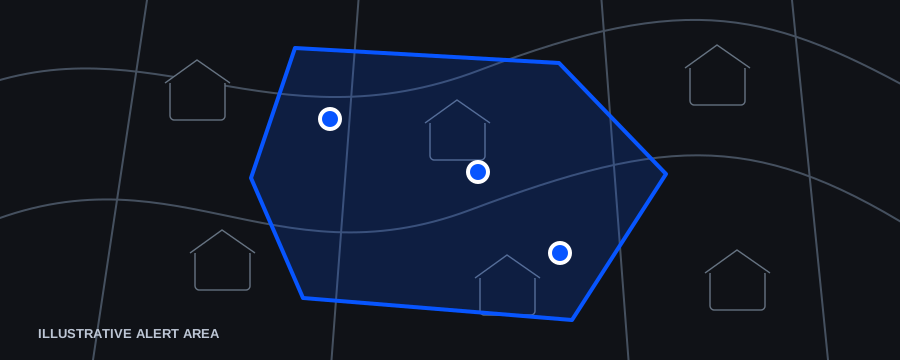
For example, a fictional department responding to a nearby threat could tell residents within a defined area to stay indoors and follow its next update. A separate information request could ask people who already have relevant footage to submit it through the stated route. The two messages have different purposes and should not be blended into an ambiguous call to action.
A fictional safety message
The important questions,
answered together.
This illustrates message structure, not a real incident or an instruction for your location.
Preserve attention for information that warrants it
The platform vets departments and is intended for consequential public safety alerts rather than routine events or promotional updates. Verification identifies an authorized department source; restrained use helps residents recognize why an interruption matters.
CISA’s warning guidance explains that irrelevant alerts can lead recipients to discount or unsubscribe from subsequent messages. A focused channel is therefore an operating choice as well as a product feature. Write the action clearly, update changing facts and keep the agency’s other official warning arrangements available.
Make the message usable
A well-prepared update identifies its source, relevant place, time, requested public action, and any limits on what is known. When facts change, residents need a clear follow-up rather than an ambiguous second message.
Connect requests with incoming information
A public request may generate community information through Lucas. Establish the reviewing team, expected monitoring process, and escalation rules before the request is published.
Test the complete workflow
During evaluation, verify publishing access, how the update appears to residents, the notification behavior of supported devices, and the procedure for corrections or withdrawal. A demonstration should not be mistaken for a delivery guarantee.
Write for the person receiving the information
Begin with the reason the update matters. Give the relevant place and time, identify the issuing agency, and make the requested action easy to find. Supporting detail should clarify the request rather than bury it. Someone reading quickly should still understand what the department is saying and what it wants the public to do.
This is a communication decision as much as a publishing decision. A useful public request might ask for an observation about an item, a relevant time window or information about a person. Keep examples proportionate and specific, and avoid asking people to take investigative action themselves.
Keep an update useful as the situation changes
Plan the follow-up before publication. If a person is located, a road reopens or the original request changes, the public needs a clear way to recognize the newer information. Agree internally on who can prepare the correction, which other channels also need updating and how the department will avoid circulating an obsolete instruction.
During evaluation, inspect the actual available publishing and case controls. Ask what a follower sees, how an update is identified and which actions are supported in the current build. A website illustration explains the intended experience; it does not establish an operational procedure or replace the agency’s communications policy.
Build the message around the decision
Before choosing a headline, decide what the audience needs to know or do. Is the department sharing a local condition, asking for information or correcting an earlier notice? Those purposes call for different instructions and different amounts of detail.
FEMA’s warning-message guidance identifies source, location, timeframe, hazard, likely impact and protective behavior. A routine department update may not need every warning component, but it still needs enough information for the reader’s decision. Name the affected stretch of road rather than assuming that every reader knows a local nickname.
Write the main instruction early, then explain the supporting detail. CDC crisis-communication guidance notes that stress can affect how people process information. Short, credible instructions are a better response to that constraint than dramatic vocabulary or a dense block of background material.
Source: FEMA: components of an alert and warning · CDC: psychology of a crisis
An editorial check before publishing
Read the draft from outside the department. Can a visitor identify the issuing agency, locate the affected area and tell whether the notice is current? Does the instruction describe an action the intended audience can actually take? Is a contact or reporting route included when one is needed?
Review any request for public information carefully. Explain what could help without releasing details that should remain private or inviting residents to approach someone. Confirm that photographs, names and case details are appropriate for public release under the agency’s process.
For a fictional closure notice, a useful review might catch an ambiguous intersection, an old reopening time or an instruction intended only for one side of the closure. These are editorial questions, not a claim that Sentinel automatically checks a message’s accuracy or legal suitability.
Give updates an owner and a next review
A published message may outlive the circumstances that prompted it. Decide who will check whether it needs a correction, a new instruction or a resolution notice. Keep the source of the latest update easy to find, especially when an earlier version has been shared elsewhere.
If facts remain uncertain, distinguish confirmed information from what is still being checked. Acknowledging an unknown can help readers understand the limits of the current account; filling the gap with reassurance can create a misleading expectation. The agency decides what it is able to disclose.
During evaluation, inspect how the current product handles publication and later changes, then agree the staff process around those steps. A useful public channel depends on maintaining information after the first send, not simply making that send easy.
Source: CDC: psychology of a crisis
Sources and further reading
- FEMA: components of an alert and warning
- CDC: psychology of a crisis
- CISA: relevant, actionable public warnings
Page reviewed October 27, 2026. External guidance explains the stated topic; it does not establish a product outcome or endorsement.